Thermal Paste Renewal
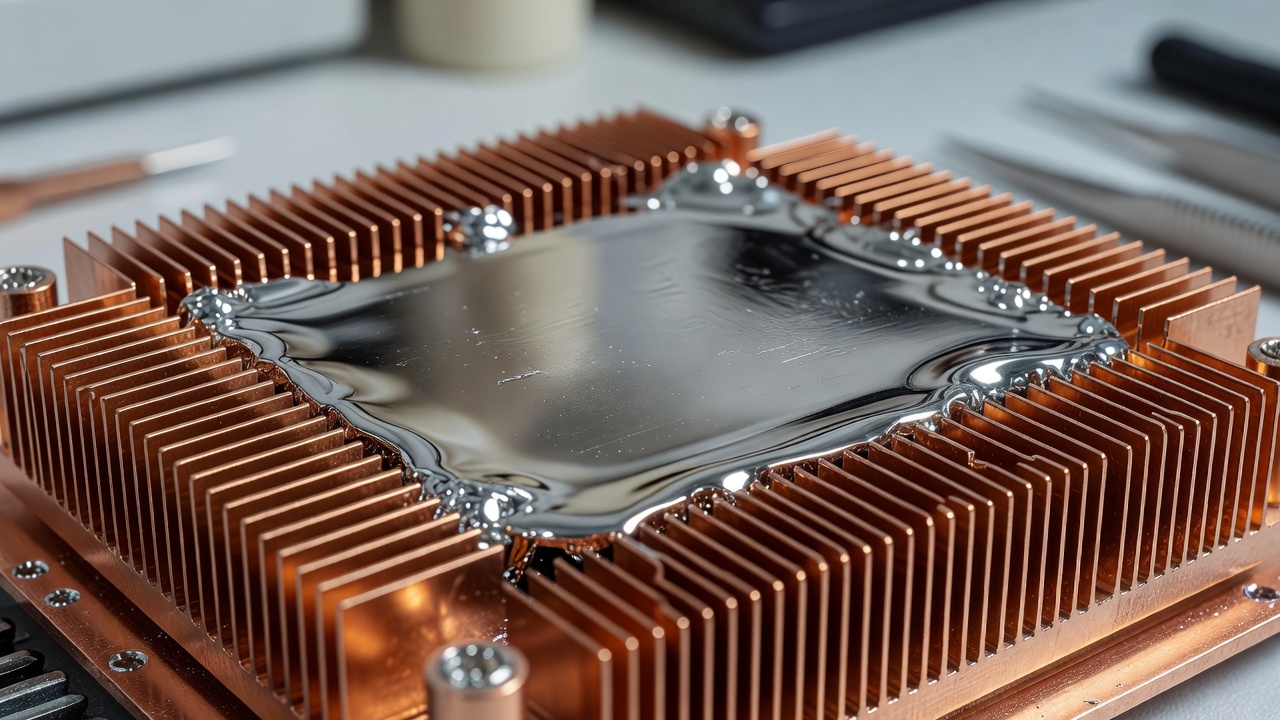
The vast majority of gamers insist on buying factory-sealed consoles, operating under the assumption that mass-assembly line construction guarantees peak performance. Analytical tear-downs prove otherwise. The weak point of modern gaming hardware is not the silicon—it is the thermal interface.
The Mass-Production Compromise
In order to produce millions of consoles rapidly, manufacturers use industrial-grade thermal paste pads that are stamped on robotically. Over time, this compound dries out, becomes chalky, and loses its heat-transfer efficiency. This leads to louder fan noise, thermal throttling, and degraded framerates.
The Refurbisher's Advantage
When a console goes to a high-end refurbishment facility, it is manually dismantled. The dusty heatsinks are ultrasonically cleaned. More importantly, the dried factory paste is replaced with premium, enthusiast-grade thermal compound or liquid metal. A meticulously refurbished console routinely runs 5°C to 10°C cooler than a unit pulled straight from a retail shelf.
Optical Drives and Storage Health
Aside from thermals, the only components that degrade in a console are the moving parts: the optical disc drive and the cooling fan. Certified refurbishers test optical lasers for read-error rates. If it fails, the laser assembly is replaced. Solid State Drives (SSDs) are analyzed for total terabytes written (TBW). Since gaming is primarily a read-heavy operation, console SSDs rarely approach their write-limit lifespans.
| Thermal State | Average APU Temp (Under Load) | Fan RPM |
|---|---|---|
| Factory New (Robot Paste) | 72°C | 2,100 RPM |
| 1 Year Old (Dry Paste) | 78°C | 2,800 RPM (Loud) |
| Refurbished (Premium Paste) | 66°C | 1,800 RPM (Quiet) |
By purchasing a refurbished unit, you are not buying "someone else's problem." You are buying a machine that has passed strict quality control twice—once by the manufacturer, and once by a technician prioritizing longevity over assembly-line speed. And you save 25% in the process.